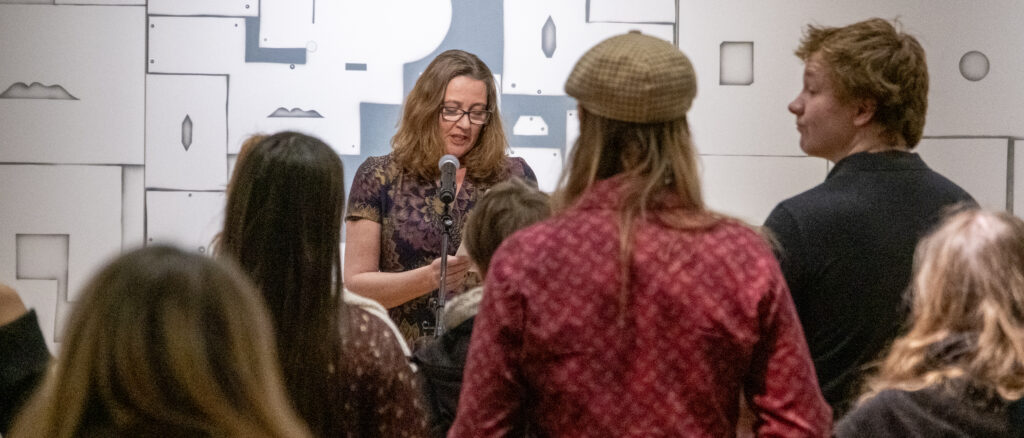
Creative responses to environmental threats was the theme of an art exhibition that opened on November 27th in the Ketilhús at Akureyri Art Museum. Fifteen Icelandic and international artists are participating, including the violinist and composer Laura Ortman, who has a video on display at the exhibition and also performed for guests at the opening.
Laura creates diverse works, including albums, live performances, and film music. She began her career as a visual artist before deciding to focus on music as her primary medium and describes her artistic process as "sound sculpting." In the video work My Soul Remainer (2019), Laura plays an electric violin in a landscape of the American Southwest, weaving together classical music tradition and references to Indigenous music, as she is of the White Mountain Apache tribe. My Soul Remainer (2019) spilar Laura á rafmagnsfiðlu í landslagi suðvesturríkja Bandaríkjanna og fléttar saman klassískri tónlistarhefð og vísunum í tónlist frumbyggja, en hún er af White Mountain Apache ættbálkinum.
Other participating artists are: A Snæfellsjökuls rawlings, Aurora Robson, Bolatta Silis-Høegh, Björg Eiríksdóttir, Camilla Thorup, Hekla Dögg Jónsdóttir, Hildur Hákonardóttir, Jóna Hlíf Halldórsdóttir, Kristinn Már Pálmason, Peter Holst Henckel, Sigga Björg Sigurðardóttir, Sigrún Hrólfsdóttir and Þórdís Aðalsteinsdóttir.
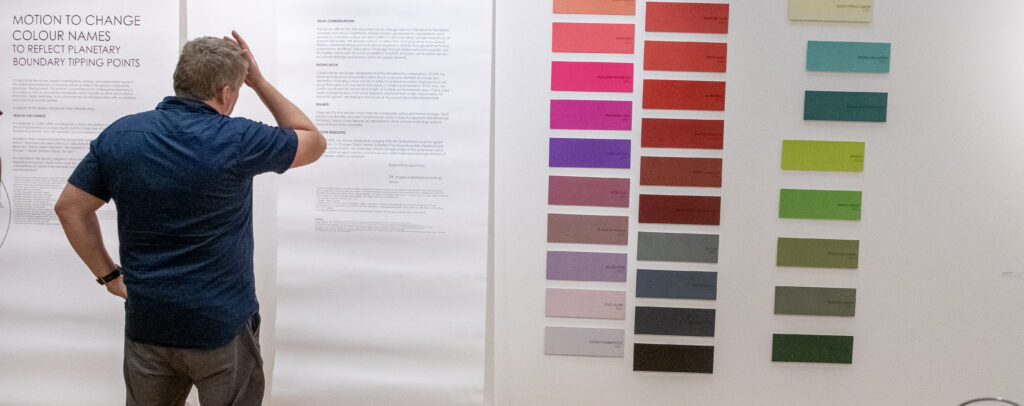
Creative responses directs attention to creative responses as a fundamental aspect of life, and to the importance of art when confronting a changing worldview due to climate change and other environmental threats. Guided by an ecocentric mindset, the main themes are interconnectedness, complex systems, and diversity. The works in the exhibition explore transformations and the blurred boundaries between the inner and outer, nature and culture. Various types of relationships are in focus, including interactions that span a wide spectrum, from abuse of power and injustice to care and responsibility, as well as emotional responses ranging from eco-grief and anxiety to hope and creativity.

Creative responses is part of an international, interdisciplinary collaborative project that sheds light on the importance of creative activities in a world facing profound transformations and works with the idea that artistic response not only involves processing transformations in our environment but is also a key factor in ensuring survival of humanity. The emphasis is on creating solidarity in a forum where diverse voices—scholars, artists, writers, and activists—meet to explore eco-art and the relationship between humans and the environment. Each event involves transformations, new participants, and adaptation to the local environment. The diverse cultural backgrounds of the participants are reflected in their works, but the main focus is on the various connections between them and their shared global challenges.
The curators are Auður and Þórdís Aðalsteinsdætur.
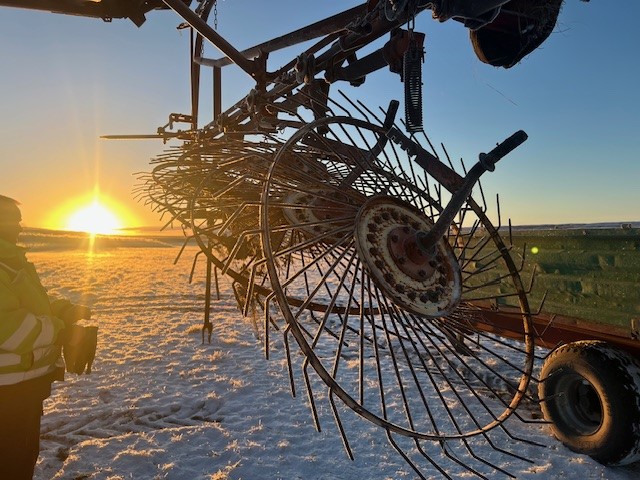
In connection with the exhibition, the University of Iceland Research Centre in Þingeyjarsveit held a symposium at Gígur, Skútustaðir, on November 25th. There, the center's guest artist, Hrafnkell Sigurðsson, spoke about a project he worked on in connection with the exhibition at the Akureyri Art Museum, in collaboration with people in Þingeyjarsveit. Hrafnkell has been working on a sculpture made from found materials in the area, specifically hay balers. In addition, sculpture students at the Þingeyjarskóli have created their own sculptures in collaboration with Hrafnkell, and they also have a place in the exhibition.